docs(scaling): note that scaling shifts solver tolerance meaning - #945
Conversation


Add a caveat to the numerical-scaling notebook explaining that solver
feasibility and optimality tolerances apply to the scaled problem, so a
fixed tolerance maps to different absolute tolerances in original units.

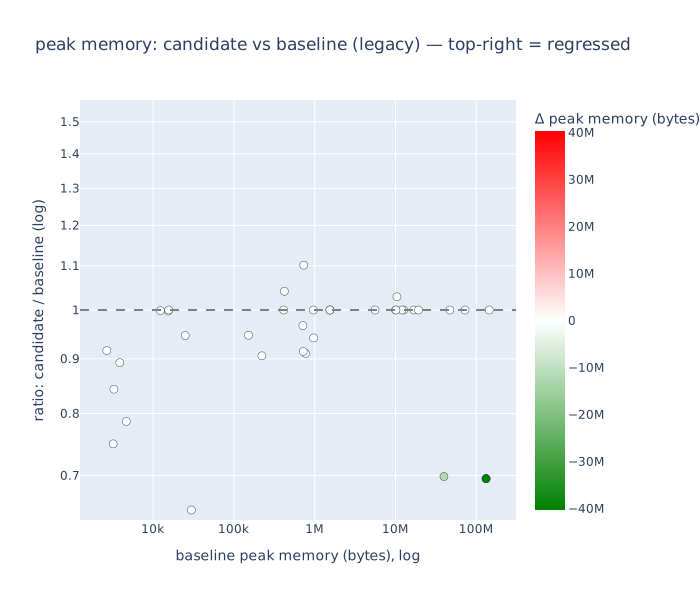
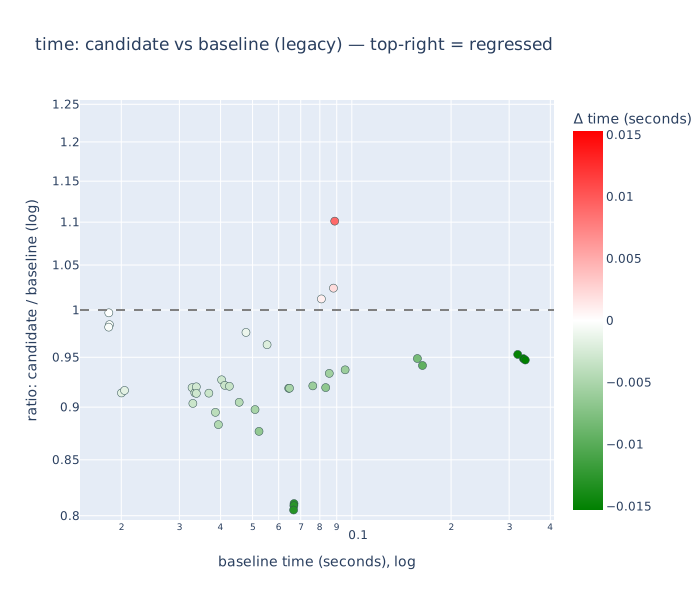
Build cost — v1 vs legacyv1 build peak & time relative to legacy, on this commit — not a comparison against master (that is CodSpeed).
Full table (time + peak, mean)📊 Interactive plots + CSV: download the semantics-report-v1-vs-legacy artifact from this run. Report-only · not a gate · refreshed on every push · obsolete once legacy is dropped. |

Merging this PR will improve performance by 19.48%
Performance Changes
Tip Curious why performance improved? Comment Comparing 
Footnotes
|

1 participant

The scaling feature is nice, but scaling changes the numbers the solver
actually works on. That also changes what the solver's tolerances mean, and I
think a short note of caution about this in the docs would help users avoid
surprises.
Note
The following content was generated by AI.
Changes proposed in this Pull Request
tutorial (
examples/numerical-scaling.ipynb, rendered atnumerical-scaling.html).tolerances to the scaled problem, not to the original units. So a fixed
tolerance maps to different absolute tolerances per row and column once you
scale, and a scaled run matches an unscaled run only up to solver tolerance,
not bit-for-bit.
trouble, and re-check the tolerances if you rely on tight ones.
Docs-only change. Built locally with the
docsextra; the page renders and thenew bullet appears.
Checklist
AGENTS.md).doc.doc/release_notes.rstof the upcoming release is included.